- Eye Health
It takes a team to ensure children can reach their full potential. As we spotlight some of the unsung heroes of child eye health in Africa, meet the optical technicians quietly helping children see, stay in school and thrive.
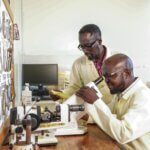
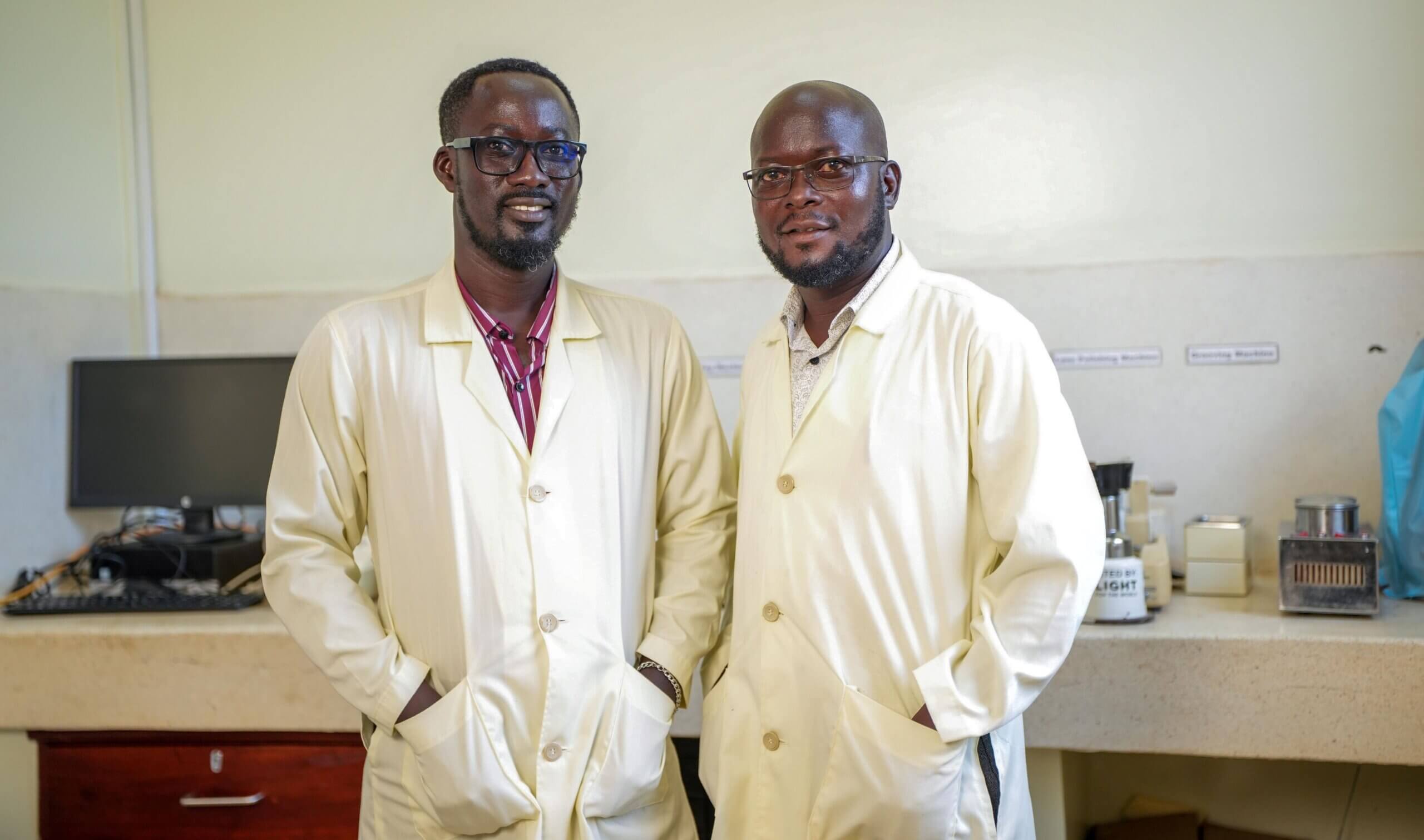
Jimmy Ogwal and Davidson Komakech have lost count of how many pairs of spectacles they have made — but they know it is a big number.
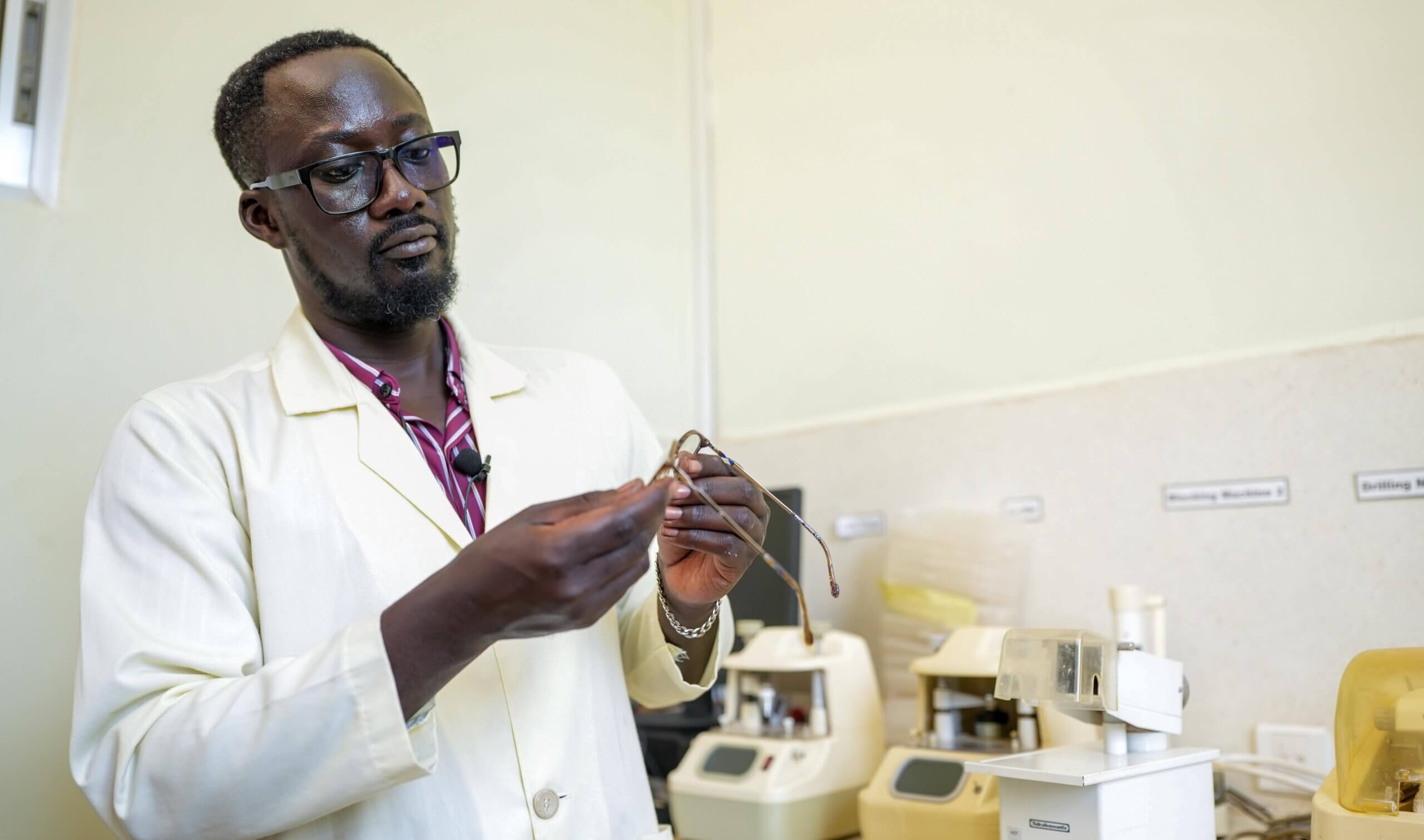
The Senior Optical Technicians, both 44, have been creating glasses for child and adult patients since 2010 at the National Optical Workshop in Entebbe Regional Referral Hospital, Uganda.
“We can produce up to 60 pairs on a daily basis,” Davidson says.
“But if we start counting the number of specs we have made since 2010, we are in the hundreds of thousands.”
A pioneering programme for child eye health in Africa
Jimmy and Davidson are among the eye health specialists working behind the scenes to support child eye health in Africa.
Effective child eye health treatment depends on a workforce well beyond ophthalmologists. Community health workers, teachers, optical technicians and others all play a crucial role in connecting children with care.
“1,2,3 I Can See!” is Light for the World’s flagship child and school eye health programme, working with ministries of health and education to strengthen child eye health systems in Burkina Faso, Ethiopia, Mozambique and Uganda.
By training teachers, optometrists, community health workers and others, children are screened early, referred quickly and given the care they need by specialist doctors like paediatric ophthalmologists.
From 2021 until the end of 2025, the “1,2,3 I Can See!” Programme distributed 13,068 pairs of glasses to children, with an additional 4,343 pairs for schoolteachers.
The duo making affordable spectacles for Ugandans
Jimmy and Davidson were trained by Light for the World in every stage of the glasses-making process, from fitting frames for patients and checking prescriptions, to polishing lenses. They use donated machines to assemble glasses in the workshop and perform maintenance and repairs when needed.
“I like my job because I like to work with my hands. I’m not a laptop person. I could not be just sitting at the computer. I need my work to be always on and I love that,” Davidson, who often runs into patients in Entebbe, says.
“Making a pair of spectacles depends on the type of frame you are fitting. There are those which are rimless and there are those which are semi-rim, metallic and plastic.
“Each of them has different challenges. That’s why their fitting time varies, from five to even 30 minutes.”
Jimmy and Davidson run the only national optical workshop in Uganda, established through Light for the World’s National Intervention in Uncorrected Refractive Errors (NIURE) programme in close collaboration with the Uganda Ministry of Health. It is part of Uganda’s public eye-health infrastructure, with Light for the World continuing to provide significant operational, technical and maintenance support.
Patients come from across the country to see the optical technicians. For those unable to travel, a network of ophthalmic clinical officers submit spectacles prescriptions to the workshop and fit the glasses — which are sent via bus courier — to their patients locally.
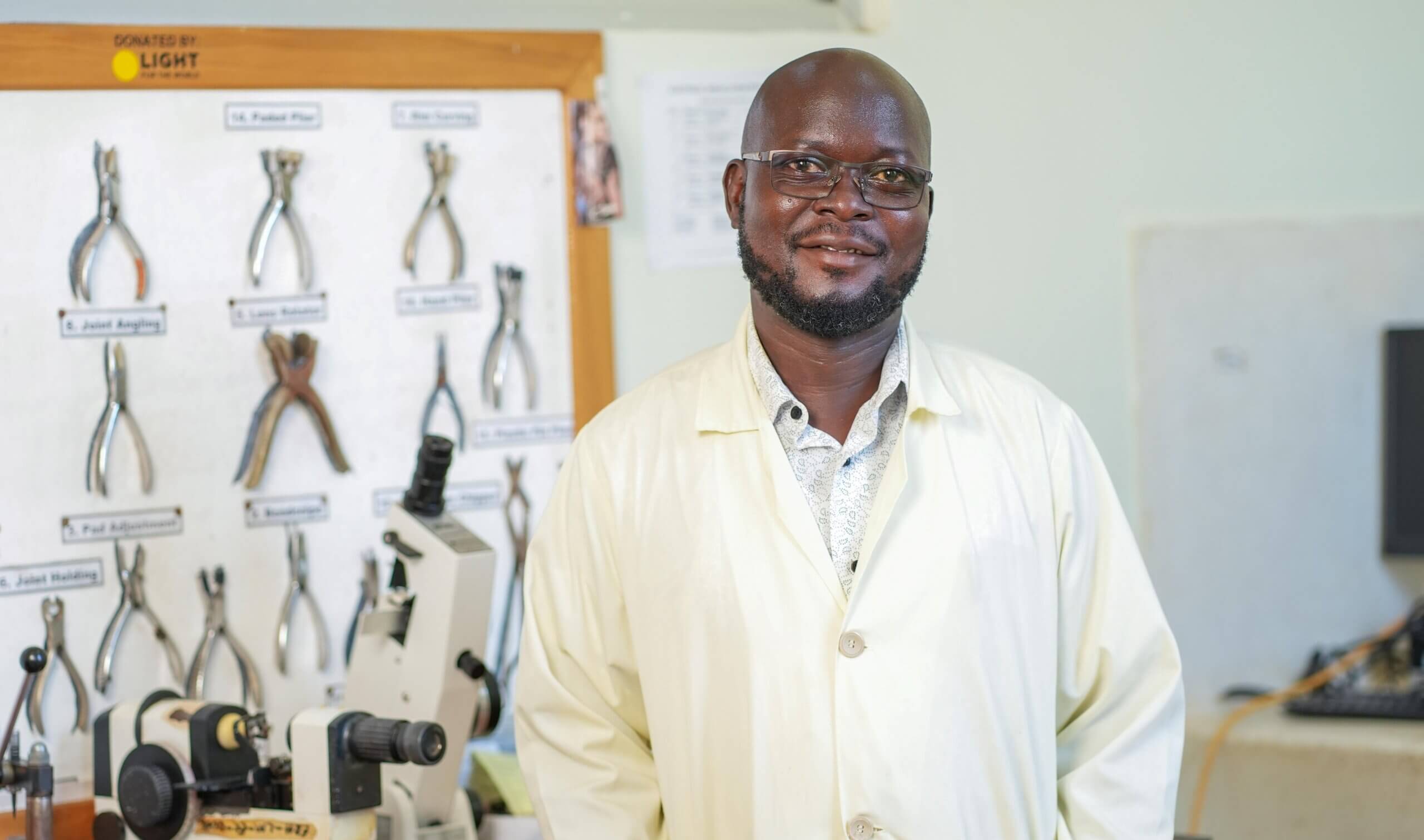
Glasses from the workshop cost about 50,000 Ugandan shillings (about €12), with pairs produced by private workshops costing up to 10 times as much. For patients who can’t afford them, Light for the World provides glasses at no cost.
“When they are benefiting from the services, it makes me happy … they also undergo a lot of challenges,” Davidson says.
Jimmy, who has a degree in disability studies, found it strange when he first saw children — even babies — wearing glasses. But through his training he learned some children are born far or near-sighted.
“I really feel that my study did not go to waste. I’m using it to help those who are in need,” he says.
“We are about making an impact for those who cannot afford such services.”
Fifty years, thousands of pairs of glasses
For half a century, Neutel Simoes de Abreu carefully crafted the pairs of glasses that would change the lives of patients.
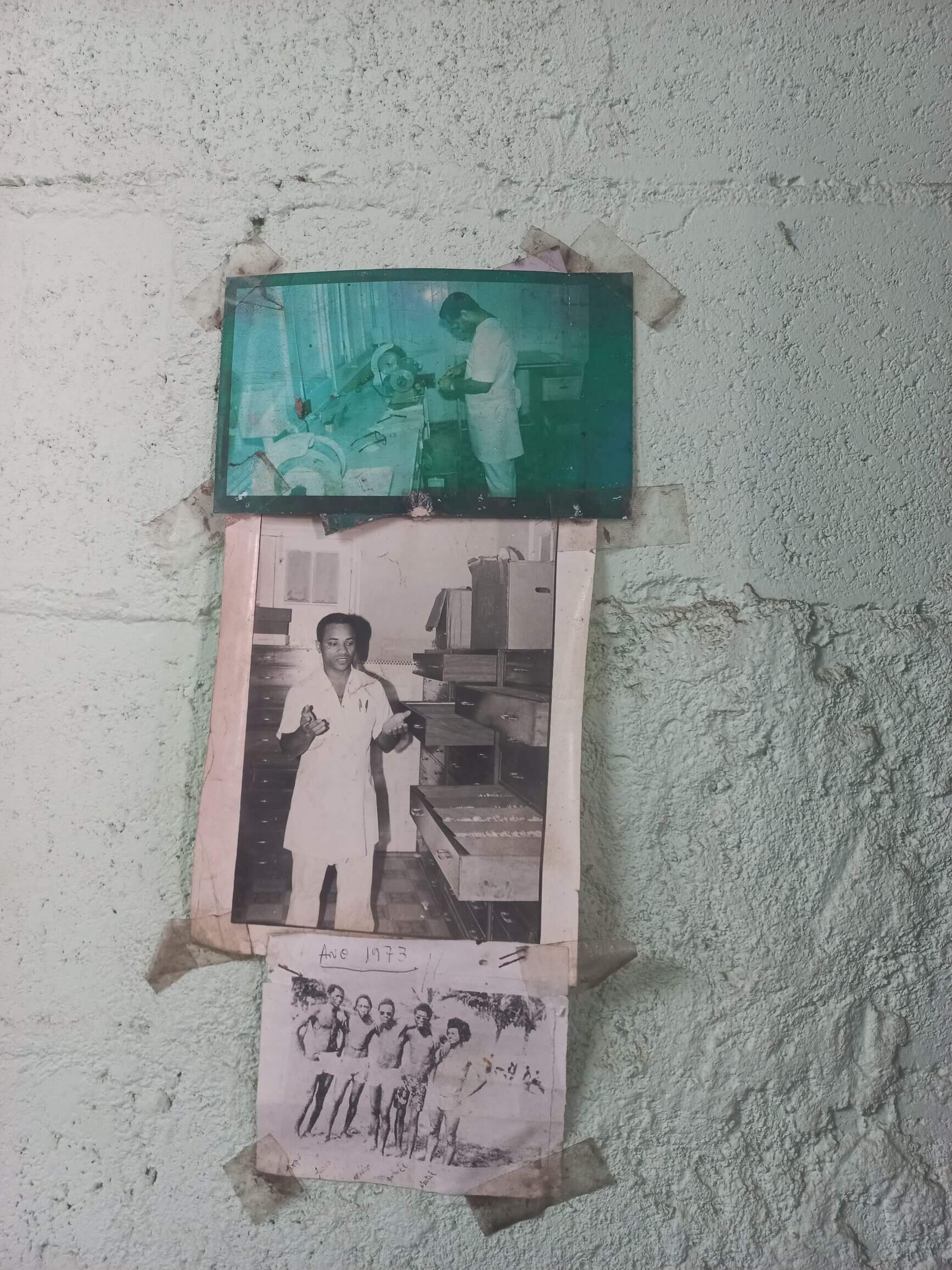
Neutel started producing glasses in 1973, aged 17. He trained on how to produce and repair glasses and worked in the small optical workshop at Maputo Central Hospital, Mozambique.
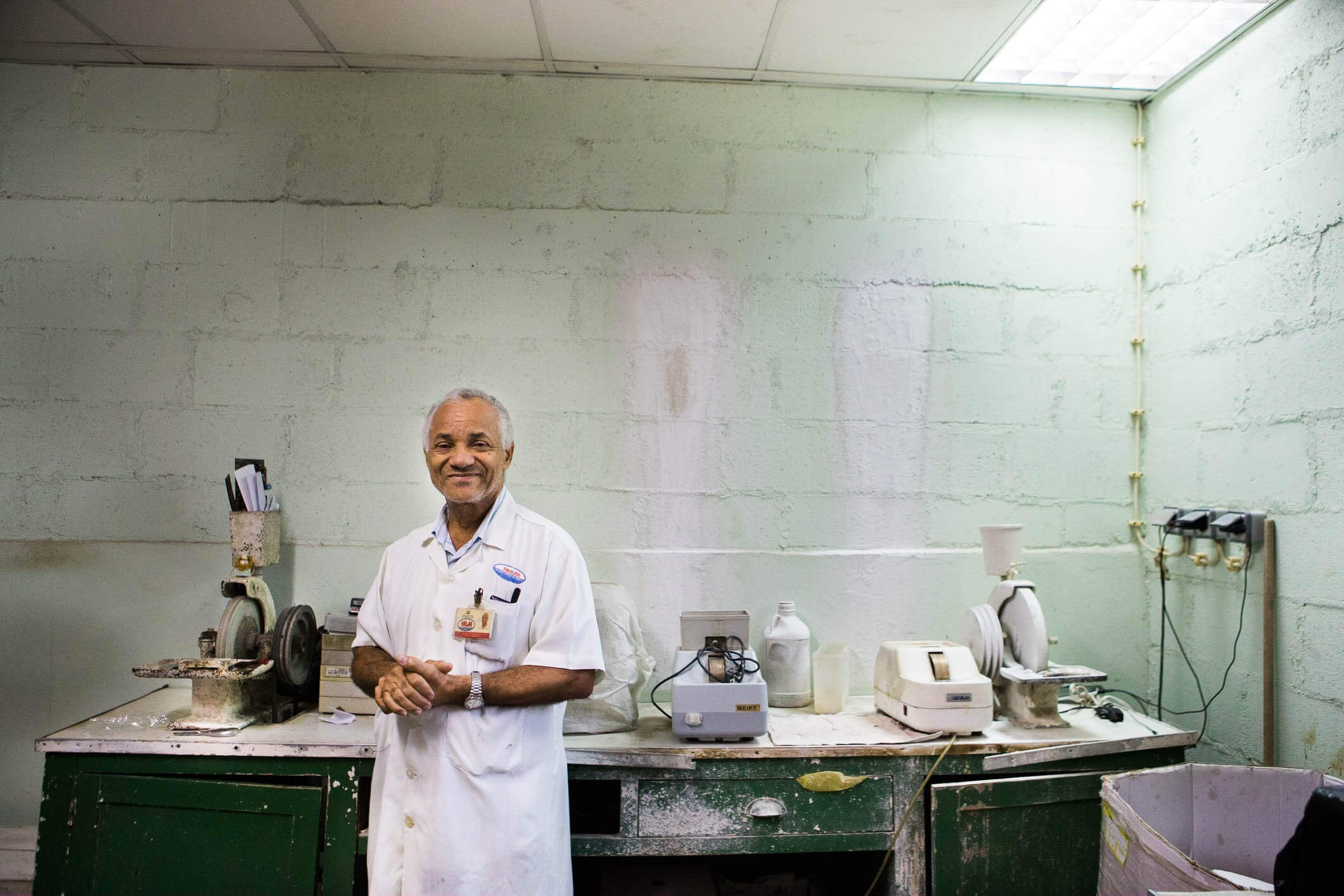
Neutel is understandably proud of his work, estimating he produced between 5,000 and 10,000 pairs of glasses in his career. But it was not without challenges. As well as old machines, there was a shortage of lenses and frames.
“My optical workshop is a museum. We survive because of donations,” Neutel said in 2024.
“Without eggs, one cannot produce an omelette.”
Since Neutel’s comments, a private optician has started at Maputo Central Hospital, offering good quality glasses for reasonable prices — though they are still too expensive for many Mozambicans. Light for the World is working with the hospital to provide accessible care for those with eye conditions, with an ambitious plan to build a new ophthalmology department in the coming years.
In Entebbe, Jimmy and Davidson face many of the same frustrations as Neutel.
“There are quite a number of challenges we face in the workshop, from machinery to lack of spare parts. The most challenging part in the workshop is the shutdown of our machines,” Jimmy says.
“When they shut down or fail to operate, we don’t have the technical people to come and do the servicing or maintenance of these machines. On the other side, most of these machines are substandard.”
Repairing glasses, restoring sight
When their pair of precious glasses breaks, patients often fear the worst. But many arrive at the Entebbe workshop to find a pleasant surprise — their existing frame can be fixed, for free, on the spot.
“They come in thinking that they will have to acquire a new pair,” Jimmy says.
“But after examining the frame and seeing that it is only a nut that has come loose, I clean the nose part, repair some alignments, and then you hand it back to them.
“They say: ‘I thought I’m going to buy a new one, now you’ve made it so perfect.’ That alone makes me so happy in my heart.”
Why investing in child eye health in Africa delivers a lifetime return
A simple eye test and a pair of glasses can change the course of a child’s life.
Uncorrected refractive error is the leading cause of vision impairment in children. However, if identified by age five and corrected with quality glasses through to 18, a child in Ethiopia, Mozambique or Uganda can double their lifetime earnings, according to data from the International Agency for the Prevention of Blindness (IAPB).
Biruktayit Kefyalew, an optometrist and Expert, Eye Health, at Light for the World, says: “Glasses are a game changer, and especially for children. Behind every child who can now see the chalkboard clearly thanks to a pair of glasses, there’s a technician like Jimmy, Davidson or Neutel. Their work rarely makes headlines, but unsung heroes like them are crucial for a country to have effective, accessible and sustainable eye care for children.
“Backing more optical technicians is one of the simplest, highest-return investments we can make. When a child gets the right pair of glasses early, you don’t just change how they see the chalkboard — you change the trajectory of their life.”