- Eye Health
As the first ever Global Summit for Eye Health takes place, Light for the World shares our commitments to strengthen and support comprehensive, inclusive and equitable eye health care in Burkina Faso, Ethiopia, Mozambique and Uganda.
Our commitment to eye health
Light for the World will invest US$15 million and reach more than 3.5 million people to advance equitable eye health care in Burkina Faso, Ethiopia, Mozambique and Uganda. We will prioritise people who face the greatest barriers to quality services, including children, women and men with and without disabilities and those in underserved communities.
We commit to delivering people-centred eye care while addressing the gender gap in access to services. This includes gender and disability responsive training, meaningful participation of women, men and people with disabilities in planning, and the collection and use of sex, age and disability disaggregated data to strengthen accountability.
“Eye health is not just about sight; it is about unlocking human potential, transforming lives, advancing education, enabling independence and ensuring that no one is left behind,” says Biruktayit Kefyalew, Eye Health Expert at Light for the World.
“The time to act for child eye health is now. No child’s future should be limited by a vision problem we can prevent or treat. Every delay costs opportunities to learn, thrive and reach their full potential.”
By 2030 we aim to reach 3,506,500 people. We commit to:
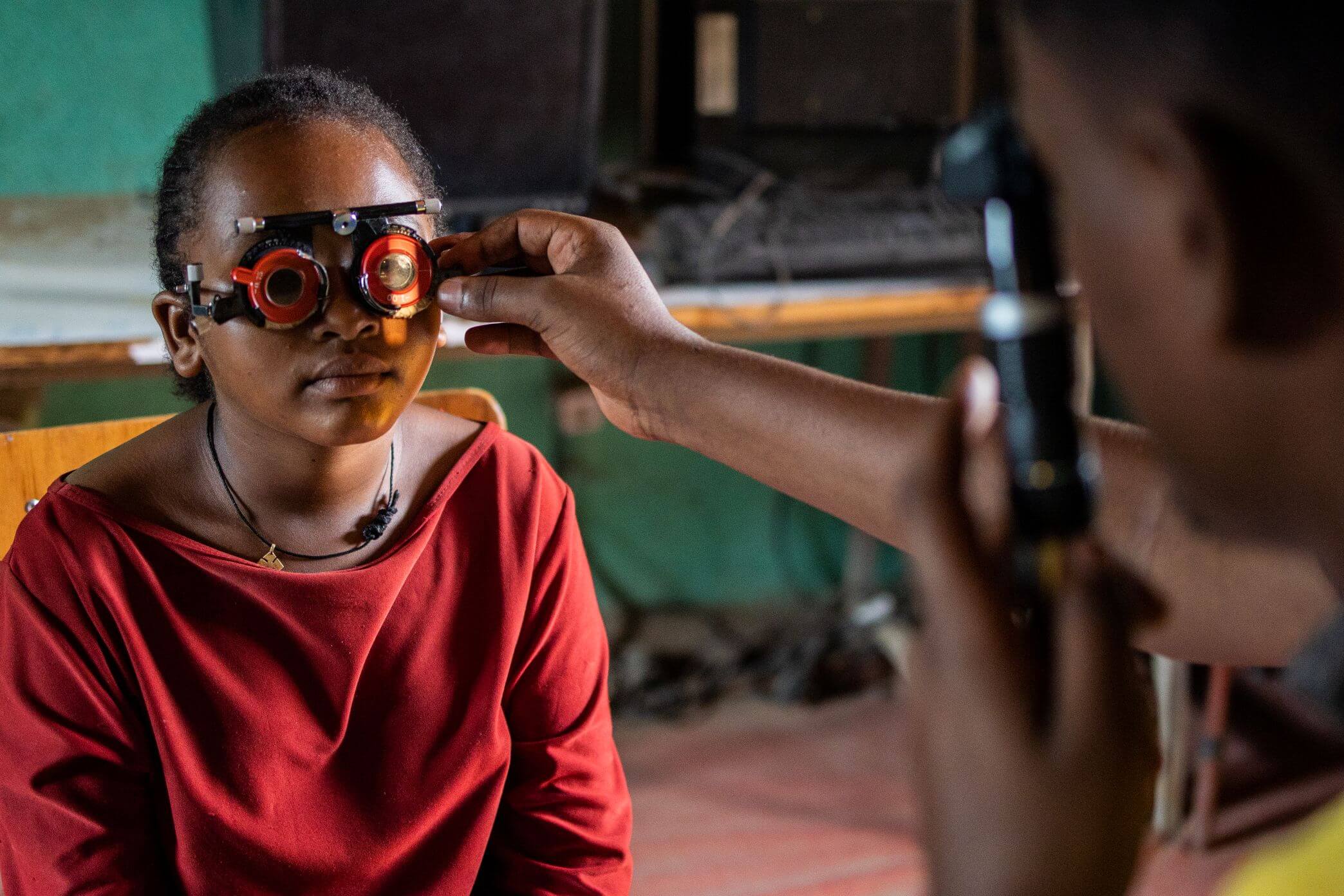
- Provide more than 10,000 corrective eyeglasses to people with refractive errors
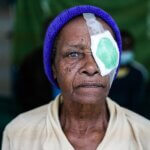
- Perform at least 100,000 cataract surgeries, allowing people to regain sight
- Screen at least 1 million children for eye conditions
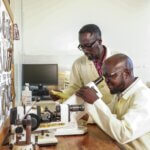
- Train more than 5,000 eye care practitioners, general health workers and community health workers
- Strengthen national systems and infrastructure, including establishment of a tertiary eye care and training centre in Mozambique
- Reach 2.5 million people through mass drug administration with antibiotics and TT surgery for 6,500 people to help eliminate blinding trachoma
- Increase women’s leadership in eye health, through mentoring, sponsorship and professional development
Read our full Commitment Statement below.
The Global Summit for Eye Health
The Global Summit for Eye Health, hosted by the Government of Antigua and Barbuda, in collaboration with the World Health Organization (WHO) and The International Agency for the Prevention of Blindness (IAPB), brings together senior leaders from government, private and public sectors, NGOs and funding institutions.
Its goal is to accelerate action to reach the 1 billion people living with avoidable sight-loss.
Five years after the UN Resolution on Vision, the Summit is a critical opportunity to turn global commitments into measurable action.
“Clear vision is a fundamental right that unlocks every child’s full potential. The Global Summit for Eye Health is our defining moment to transform political promises into permanent, life-changing investments in global eye care,” says Marion Lieser, CEO of Light for the World.
Building stronger, inclusive eye health systems
Light for the World has been working for years to create sustainable and equitable eye health care systems.
“1, 2, 3 I Can See!” is Light for the World’s flagship child and school eye health programme, working with ministries of health and education to strengthen child eye health systems in Burkina Faso, Ethiopia, Mozambique and Uganda.
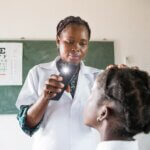
By training teachers, community health workers and other frontline personnel, children are screened early, referred quickly and connected to the right level of care including services provided by specialist doctors like paediatric ophthalmologists.
From 2021 until the end of 2025, the “1, 2, 3 I Can See!” programme trained 4,372 teachers and education workers to detect and refer children with possible vision problems. Together they pre-screened more than 1.1 million children.
The programme has distributed 13,068 pairs of glasses to children, with an additional 4,343 pairs for schoolteachers. More than 2,000 non-ophthalmic community health staff and stakeholders have been trained.
And 351,656 children have received eye health consultations at hospital, with 6,451 undergoing surgery.
“Through our “1, 2, 3 I Can See!” programme, we are working alongside ministries of health, education and other partners across Burkina Faso, Ethiopia, Mozambique and Uganda to strengthen sustainable child eye health services. With more funding, we can scale up this approach, reach more children, and ensure that preventable vision problems never stand in the way of a child’s ability to see, learn and reach their full potential,” says Biruktayit Kefyalew.
Find more on our child eye health impact, media coverage and videos on our Global Summit for Eye Health hub.
Our Commitment Statement
15 million US dollars, across four countries, targeting more than 3.5 million people.
By 2030, Light for the World commits to investing 15 million USD through donor funding to achieve equitable eye health outcomes in Burkina Faso, Ethiopia, Mozambique and Uganda. Our eye health work focuses on delivering comprehensive, people-centered services to hard-to-reach populations, including children, women and men, with and without disabilities, who experience barriers to accessing quality eye care. We strive to close the gender gap in eye health through gender and disability-responsive training, meaningful participation of women, men and persons with disabilities in planning, and the collection and use of sex, age and disability-disaggregated data to drive progress and accountability. We will also strengthen access to rare and complex eye disease services; and contribute to eliminating neglected tropical diseases (NTDs) affecting eye health in Ethiopia.
By 2030, we aim to contribute to an increase in effective refractive error coverage (eREC) and effective cataract surgical coverage (eCSC) across supported programmes. We will support more than 100,000 cataract surgeries, screen beyond 1 million children for eye conditions, provide more than 10,000 corrective eyeglasses, and train over 5,000 eye care practitioners, general and community health workers. We will contribute to eliminating blinding trachoma by reaching 2.5 million people through mass drug administration (MDA) with antibiotics and supporting 6,500 trachomatous trichiasis (TT) surgeries.
To achieve these outcomes, we will strengthen the eye health workforce, expand outreaches, improve access to essential equipment and supplies, and strengthen data and evidence-based planning. In collaboration with health and education sectors, we will support early identification, referral and management of childhood eye conditions through school-based screening and community engagement. We will advocate nationally and globally for policies and guidelines that promote integrated, equitable, accessible and sustainable eye care.
–
Read more about our work in our Eye Health Policy Brief and Advocacy Issue Brief: Eye Health.
Or contact Biruktayit Kefyalew, Expert, Eye Health, at Light for the World to discuss our work, explore partnership opportunities or request further information.