- Eye Health
It takes a team to ensure children can reach their full potential. As we spotlight some of the unsung heroes of child eye health in Africa, meet the clinical psychologist helping children prepare for surgeries — and life beyond them.
Before even looking at the eyes of her patients, Dr Ana Júlia Rocha da Costa tries to treat their fear.
A trip to the ophthalmology department at Central Hospital Beira, Mozambique, can be an intimidating prospect for those facing eye surgery — or even visiting a hospital — for the first time.
An ophthalmology technician turned clinical psychologist within the ophthalmology department, Dr Rocha da Costa provides counselling, emotional support and psychological care to young and old patients and their families at every stage of treatment.
“Before these services existed, many patients, including children and adults with eye tumours, were lost because there was no clinical psychologist to provide explanations or emotional support,” Dr Rocha da Costa says.
“Patients often attended the first consultation but never returned. With psychological services now integrated into eye care, patients better understand their conditions and complete their treatments. This has significantly improved outcomes.”
Psychosocial support for child eye health
The psychosocial support service for ophthalmology patients began in Central Hospital Beira in 2018. Light for the World is a longstanding partner of the hospital and supports training, equipment and infrastructure.
Effective child eye health treatment depends on a workforce well beyond ophthalmologists or optometrists. Community health workers, teachers, optical technicians and others all play a crucial role in connecting children with care.
“1,2,3 I Can See!” is Light for the World’s flagship child and school eye health programme, working with ministries of health and education to strengthen child eye health systems in Burkina Faso, Ethiopia, Mozambique and Uganda.
By training teachers, optometrists, community health workers and others, children are screened early, referred quickly and given the care they need by specialist doctors like paediatric ophthalmologists.
From 2021 until the end of 2025, the “1,2,3 I Can See!” Programme provided hospital consultations for more than 186,000 Mozambican children, with more than 2,500 receiving surgeries.
Dr Tiago Machissa, Head of Ophthalmology at the hospital, says the psychosocial support service is critical for treating young patients.
“I always think, especially, about the children. There are many (patients) that come to mind,” he says.
“Especially children diagnosed with retinoblastoma, which is a serious intraocular tumour that can lead to death. And these patients, both patients and their companions, come with total despair. So finding someone who can plan their treatment and their acceptance, this, for me, is something that I can’t quite get out of my mind.
“Some children also present with congenital cataracts who, after counselling and surgery, are completely satisfied and show significant visual improvement.”
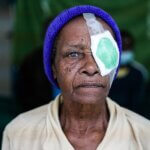
For many patients, including Maria Gimo Jorcida (pictured above), eye surgery is a scary prospect.
“I had heard frightening stories that at the hospital they remove the eye, wash it, return it, and the person becomes permanently blind. This made me fear going to the hospital,” says Maria, who underwent successful cataract surgery at Central Hospital Beira.
“My life has changed completely (since the surgery). I am happy again. I can see people clearly. I can walk alone, I can cook, I can wash, I can go to the farm. I no longer depend on my children for everything. The fear has disappeared.”
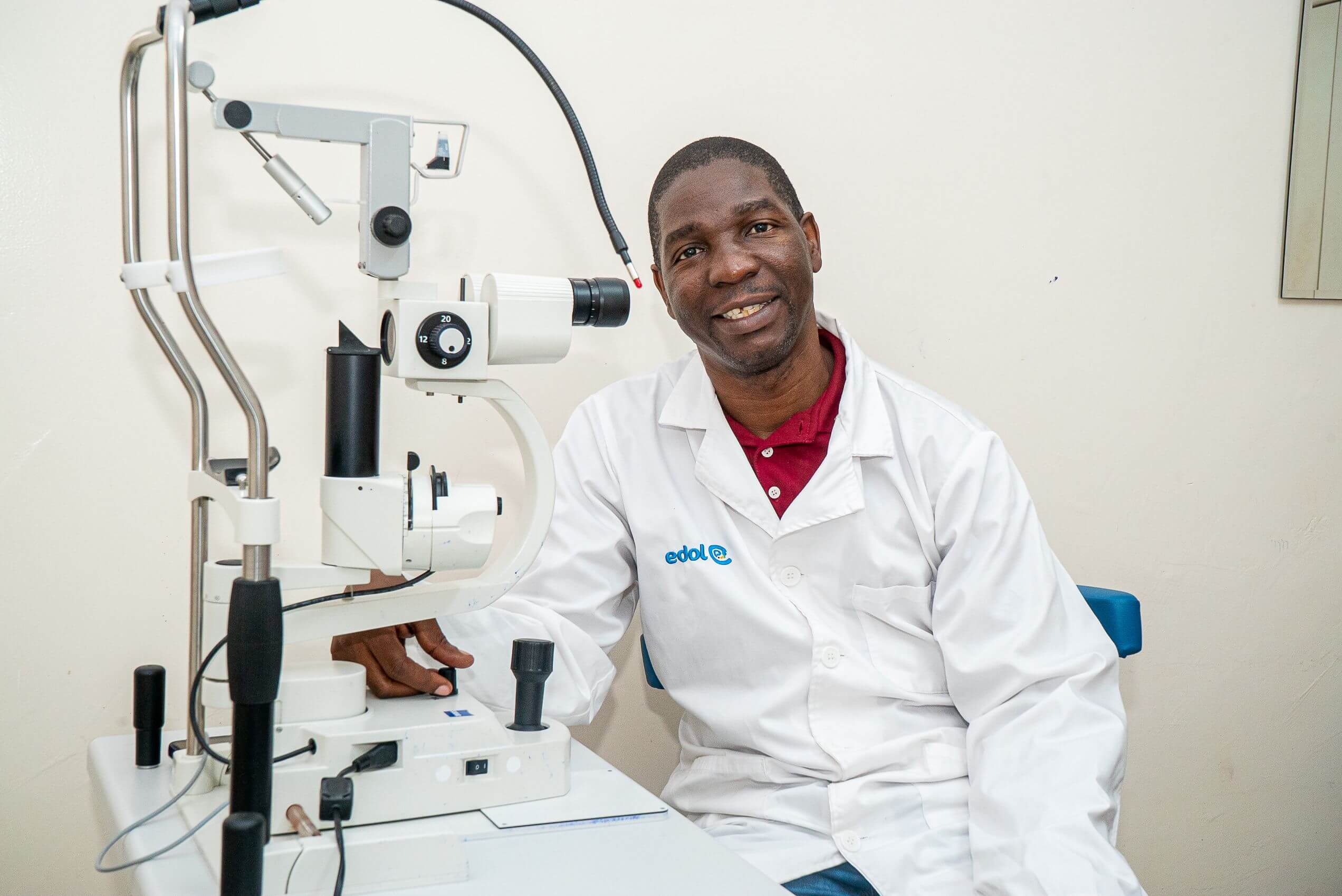
What is psychosocial support in eye care?
- Emotional and practical care that helps patients and families cope with the impact of an eye condition.
- Can include individual or group counselling before and after surgery, helping patients understand their diagnosis and know what to expect.
- Addresses the wider effects of vision loss, such as loss of confidence and independence.
- Helps patients and families process fear, misinformation or stigma around eye conditions and treatment, ensuring they complete their care.
Beyond Beira: a model worth scaling
Dr Machissa, who received community eye health training from Light for the World, says the psychosocial support service helps patients understand, accept and continue with their treatment.
“Patients accept their treatment more, it also reduces the rate of abandonment, and there is always someone to give support whenever necessary,” he says.
“It complements eye care services, promotes healing and hope for how to deal with chronic eye diseases, low vision and irreversible blindness, and promotes acceptance in radical treatments such as tumours.
“Patients always have someone available to turn to when they are distressed and without hope.”
The psychosocial support service provided to ophthalmology patients at Central Hospital Beira is understood to be the only one of its kind in Mozambique.
“There may be an opportunity for the Central Hospital Beira to share that experience with other hospitals that have ophthalmology departments,” Dr Machissa says.
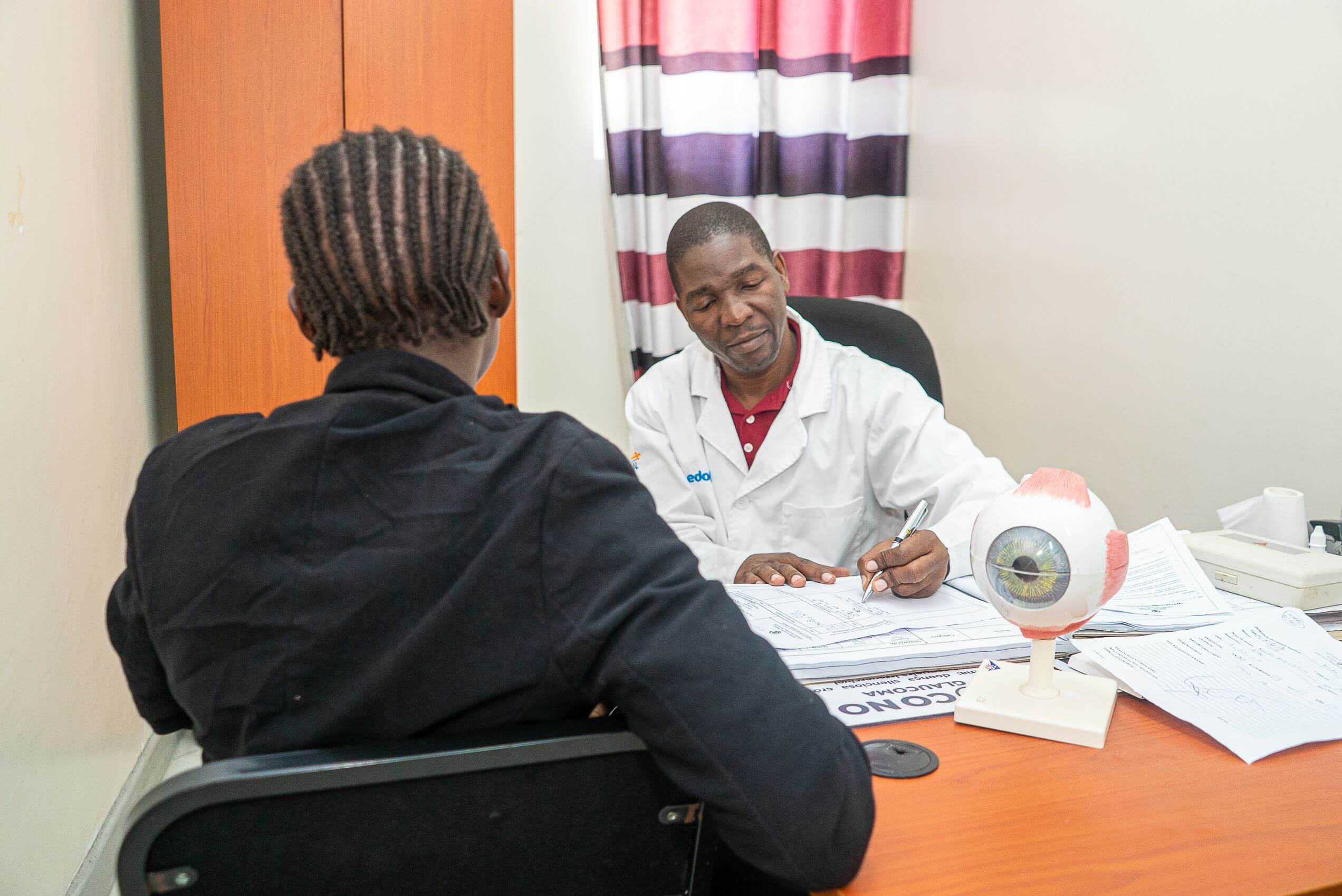
“When there is a psychosocial support service specific to ophthalmology, it greatly reduces the (treatment) abandonment rate, it greatly reduces the number of absences from surgeries (patients who fail to attend for surgery).
“People follow rigorously the necessary treatment, and it also creates some hope and reduces anxiety. So it is an important, relevant service, and we recommend it to all hospitals that have ophthalmology services.”
From technician to psychologist
Dr Rocha da Costa was part of the first group of ophthalmology technicians trained by Light for the World in 2010. She later qualified as a clinical psychologist.
On a typical day, Dr Rocha da Costa sees six patients, but it can be as many as 20 in group counselling sessions. She offers everything from pre and post-operative counselling, for example following a cataract surgery, to emotional support for patient families.
The job is not without challenges. Patients may be fearful of losing their jobs or how their child will cope following surgery.
“It is sometimes very difficult because of dealing with emotional problems, often with patients who have completely lost hope in life,” Dr Rocha da Costa says.
But she also sees remarkable improvements — in both sight and mental health — especially in women patients, who are disproportionately affected by eye problems.
“A successful surgery intervention brings hope and a very striking smile on the face,” Dr Rocha da Costa says.
“After surgery, everything changes.”
Dr Rocha da Costa credits Light for the World with supporting the introduction of the psychosocial support service.
“Without their assistance, essential psychological support services would not exist, and many patients would be lost due to fear, lack of understanding or failure to return for surgery,” she says.
“With psychological services, patients now understand their illness and return for treatment.”
The impact of psychosocial support for child eye health
Psychosocial support for a child with an eye condition can change the course of their life.
Biruktayit Kefyalew, optometrist and Expert, Eye Health, at Light for the World, says: “No child should have to face eye surgery alone and no parent or carer should be left in the dark about what to expect and what comes next.
“Psychosocial support is crucial to help patients and their families understand and accept treatment, recover and remain resilient. The model at Central Hospital Beira is proof this works. Now we need the resources to have a clinical psychologist like Dr Rocha da Costa in every hospital in Mozambique and beyond.”