- News Wrap
- Disability Rights
August 2026 News Wrap — our work, successes and impact
“Taka Ni Mali”: what Kenya’s e-waste sector can teach us about inclusive growth
Kenya’s conversation on e-waste often starts with the waste itself. More discarded phones, laptops and household electronics means more pressure on the environment.
But there is another side to this story: taka ni mali (waste is wealth). Entrepreneurs in Kenya are repairing devices, recovering materials and creating businesses around products that would otherwise be thrown away.
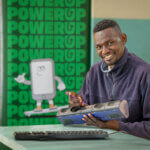
This was one of the strongest messages to emerge from the recent PowerUp programme Roundtable, co-convened by Light for the World Kenya and Bopinc. The discussion brought together entrepreneurs, regulators, government institutions and industry actors to build a stronger e-waste sector.
Entrepreneurs spoke about the realities of running a business – finding customers, accessing finance, understanding regulations and building reliable sources of income. These experiences showed that creating opportunities is only part of the equation; businesses also need to be sustainable.
The PowerUp programme reinforces this point. Since 2023, participating entrepreneurs have repaired more than 36,500 devices, collected over 68,000 kilograms of e-waste and generated more than KSh95 million (about €630,000) in revenue.
When entrepreneurs have access to markets, finance, information and practical business support, environmental action and economic growth can reinforce one another.
For Light for the World Kenya, this is where the conversation matters most. A stronger e-waste sector is not only about managing waste better. It is also about creating the conditions for more small businesses, including those owned by youth, women and people with disabilities, to build sustainable businesses and contribute to Kenya’s economy.
Making education accessible in Ethiopia
In some of Ethiopia’s most remote classrooms, Light for the World and partners are making learning accessible for all children.
Light for the World has completed the first round of distributing Inclusive Education Resource Center (IERC) materials and assistive technology in South Ethiopia Region, following a comprehensive needs assessment across six primary schools and 24 satellite schools.
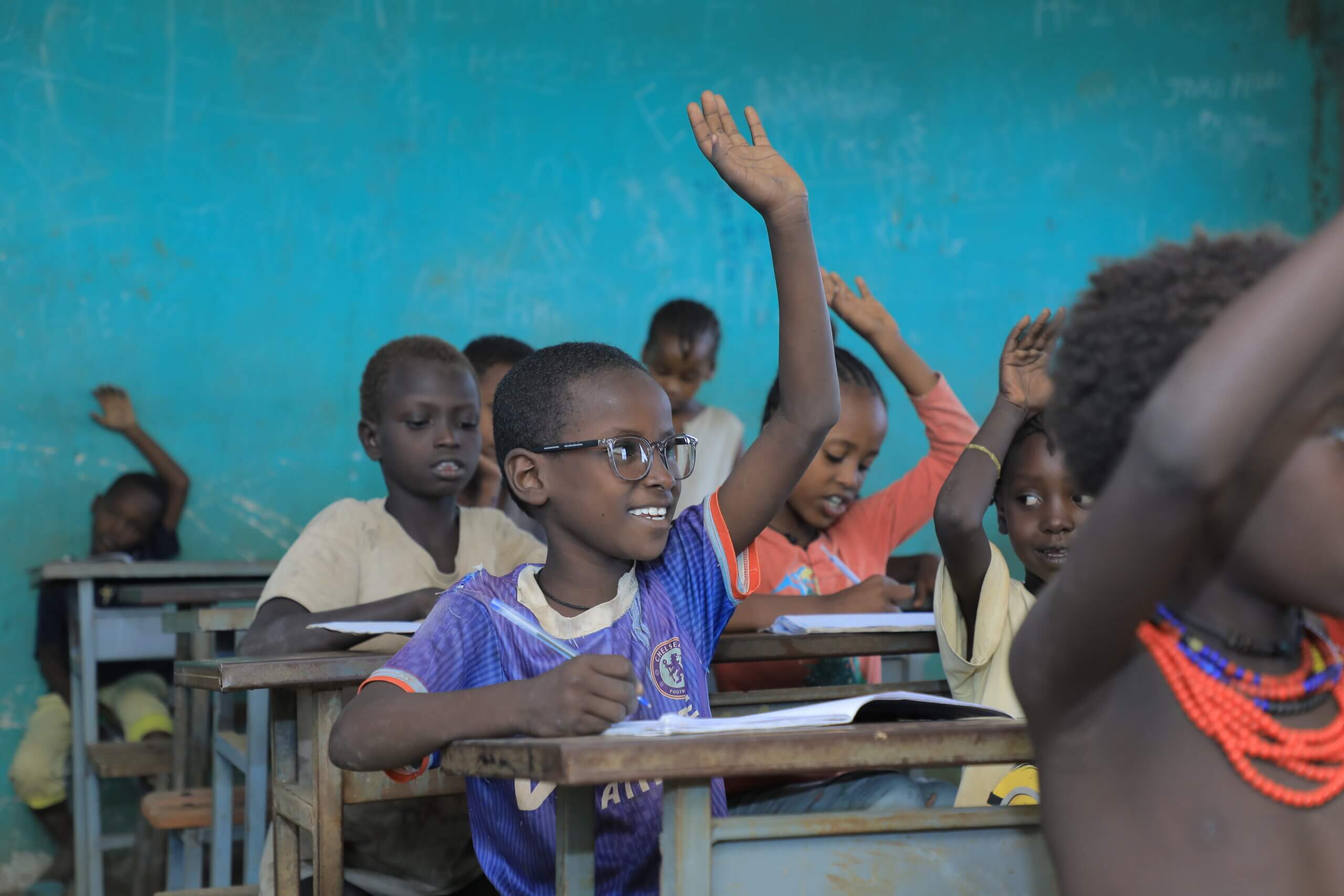
The Modelling Accountability and Effective Instruction Programme (MAEIP) is an inclusive education initiative run in partnership with Cheshire Ethiopia, with support from UNICEF.
Implemented in South Omo Zone (Dasenech and Bena Tsemay Districts) and Konso Zone (Segen Zuria District), MAEIP aims to improve foundational learning for children with disabilities in remote and underserved communities.
Working in drought and conflict-affected areas, the programme supports the identification and enrollment of children with disabilities, strengthens inclusive teaching practices and improves access to education through teacher training, assistive devices, rehabilitation support and community engagement.
Since launch, the project has:
- Established four Inclusive Education Resource Centers (IERCs)
- Reached 16 satellite schools
- Supplied 33 core inclusive education resource items, including Montessori learning materials
- Provided assistive devices to 79 children, removing barriers to learning.
First of its kind inclusive self-defence manual backs girls’ rights in Mozambique
Light for the World, Girl Child Rights and No Means No are supporting safer, more inclusive environments, where every girl, woman and young person can exercise their rights, make informed choices and live free from violence.
The first of its kind, inclusive violence prevention manual “No Means No – Girls, Women, and Youth” has been launched. The manual is a tool to help strengthen knowledge and skills to enable girls, women and young people to recognise unsafe situations, set boundaries, break cycles of violence and stand up for their right to say “No”, while also engaging whole communities in preventing violence.
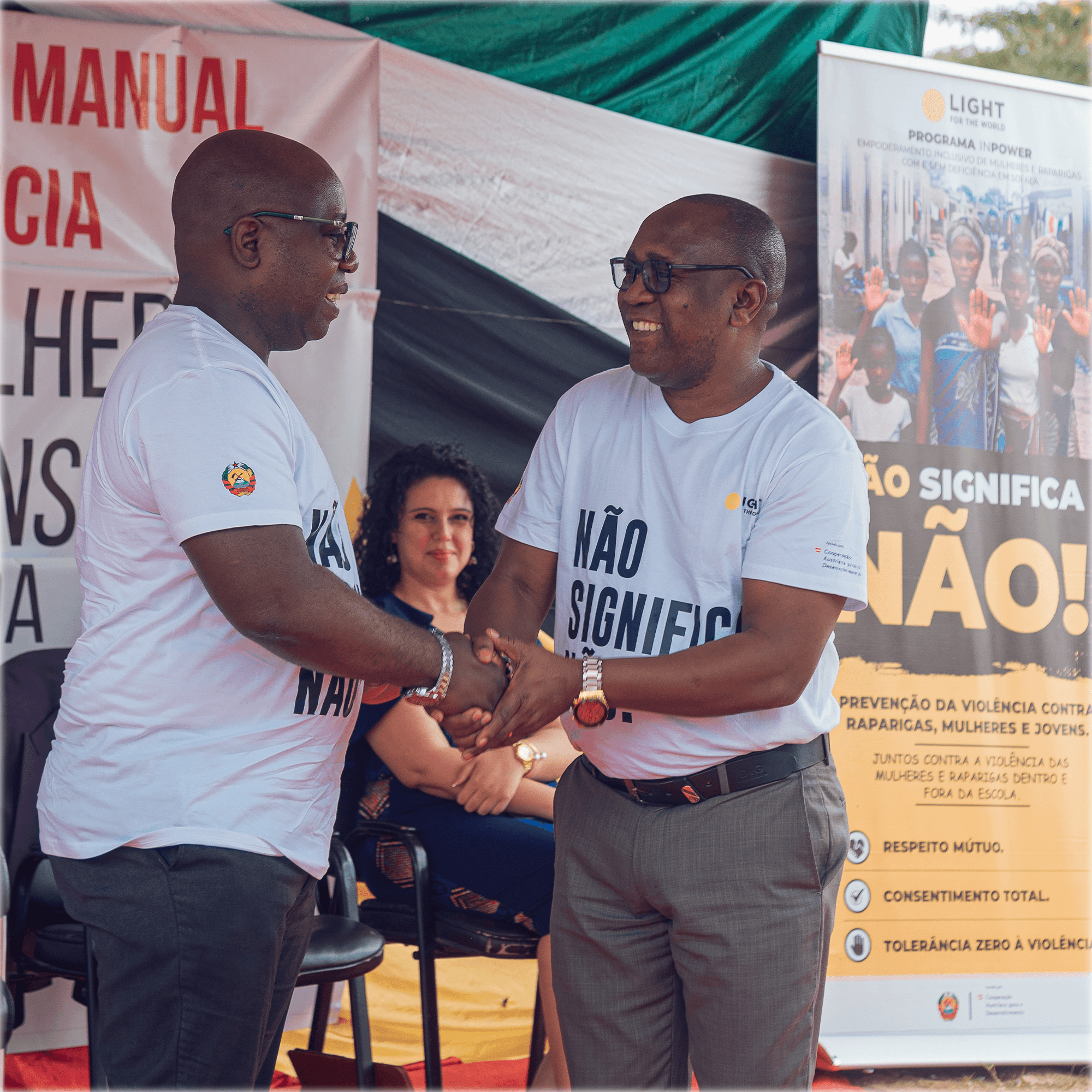
The launch ceremony was hosted by Mao Tse Tung Primary School in the Nhamatanda district of Mozambique, bringing together representatives from the Education, Gender, Child and Social Action sectors, partners and the school communities.
Under the InPower programme, led by Light for the World, as part of International Partnerships Austria, the manual is an important step in promoting safety, dignity and participation as fundamental rights for all children and young people.
The official handover of the manuals to the Provincial Department of Education and the District Service of Education, Youth and Technology, highlights the commitment of the Government of Mozambique, national institutions and partners to expand access to violence prevention tools and to strengthen more inclusive and protective schools and communities.
Planting trees for a greener future
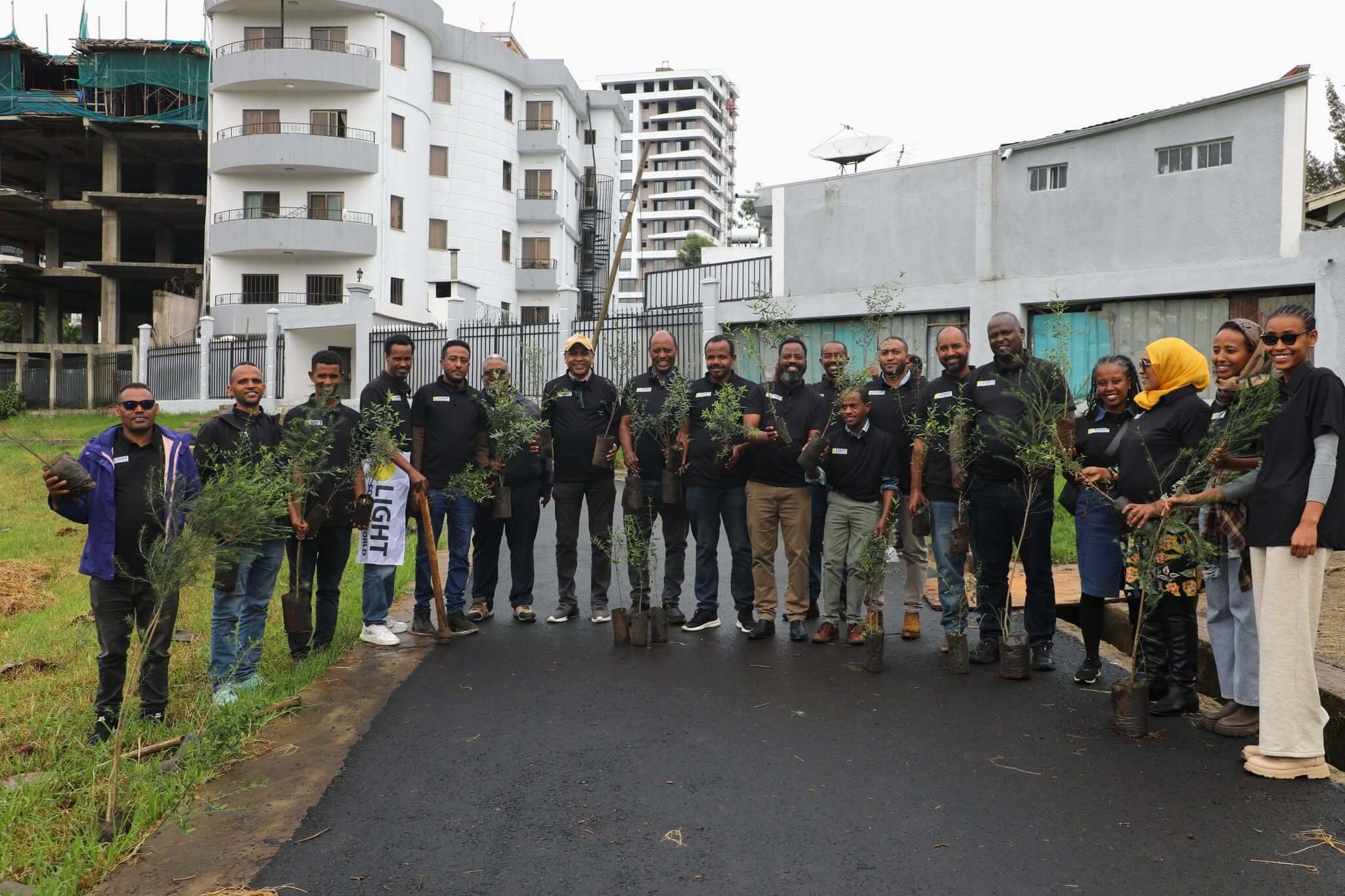
Light for the World colleagues in Ethiopia have planted trees at the Wollo Sefer gardening area in Addis Ababa to support Ethiopia’s Green Legacy Initiative.
Launched in 2019, the initiative aims to restore ecosystems, combat deforestation and soil erosion, expand forest coverage, and improve air and water quality, while also creating millions of jobs. Since its launch, over 47 billion seedlings have been planted, strengthening the country’s climate resilience.
Through this collective effort, Light for the World Ethiopia is proud to contribute to the national Green Legacy movement and support a healthier environment for future generations.
In case you missed it…
- United Disabled Persons of Kenya (UDPK) celebrated International Youth Day by sharing best practices in work place accessibility.
- Jacqueline Bungart, Senior Expert, Humanitarian Action, at Light for the World, explained how organisations can ensure people with disabilities are included in humanitarian response.
- Light for the World has had several projects shortlisted for a Zero Project Award. Read the full list of innovations here.
- No Means No Worldwide published solutions to prevent and respond to childhood sexual violence.
- The South Sudan men’s blind football team, supported by Light for the World and adidas Foundation, was named a finalist for the Eli Wolff Football Without Limits Award.
- Discover stories that drive change. A new edition is coming soon: subscribe to our international newsletter.