- Humanitarian Action
Disability-inclusive humanitarian action means no one is left behind when disaster strikes. Here are five steps humanitarian organisations can take right now to ensure no one is left behind in humanitarian response.
Why disability-inclusive humanitarian action matters
When disaster strikes, people with disabilities are among the most at risk — and among the most excluded from humanitarian response.
They are up to four times more likely to die than those without disabilities, and are also more likely to be injured or to suffer property damage.
According to the UN’s flagship 2024 report on disability, 39 per cent of people with disabilities have a lot of difficulty or cannot evacuate during a sudden disaster.
Inclusion is a right
Inclusion in emergencies is a human right, enshrined in international law.
Article 11 of the UN Convention on the Rights of Persons with Disabilities (CRPD) obligates states to take all necessary measures to protect and ensure the safety of people with disabilities in “situations of risk”, including emergencies.
Making humanitarian programmes disability-inclusive is not a nice-to-have — it’s essential. Here are five practical steps to make humanitarian programmes truly inclusive.
1. Partner with OPDs from the start
Organisations of Persons with Disabilities (OPDs) bring lived experience and invaluable local expertise. They understand the barriers people with disabilities face and how to overcome them.
How to do it:
- Involve OPDs in programme design, not just evaluation
- Build in OPD review at each programme milestone
- Fund OPDs directly to strengthen leadership and sustainability
A joint impact in Burkina Faso
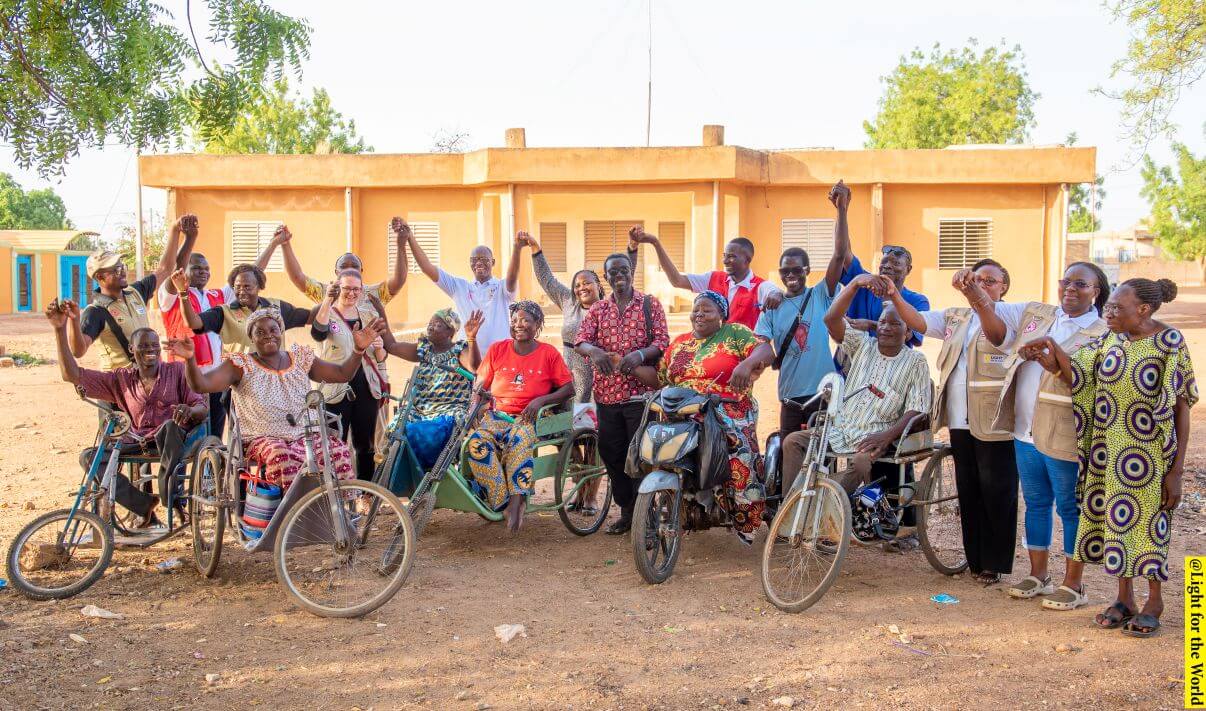
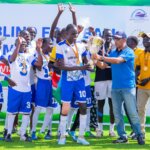
In Burkina Faso, our award-winning IMPACT-BF project works directly with OPDs and communities affected by crisis to promote inclusive humanitarian action.
“Inclusion of people with disabilities in humanitarian projects and programmes is possible. Light for the World is setting an example as part of International Partnerships Austria,” says Tihanibie Ghislain Hien, IMPACT-BF Project Manager.
“Organisations of Persons with Disabilities (OPDs) are central to IMPACT-BF. By establishing advocacy groups, identifying project participants and encouraging other organisations to make reasonable accommodations, their leadership is ensuring that no one is left behind.”
2. Run an accessibility audit
Accessibility is not the same for everyone. Work with OPDs and people with disabilities to understand how to make all communication, information and participation accessible and inclusive in emergency responses.
How to do it:
- Assess physical infrastructure (e.g. washrooms, shelters and food distribution points)
- Provide information in accessible formats, including braille, easy-to-read materials and sign language
- Test emergency procedures to identify barriers and gaps
Improving access in refugee camps
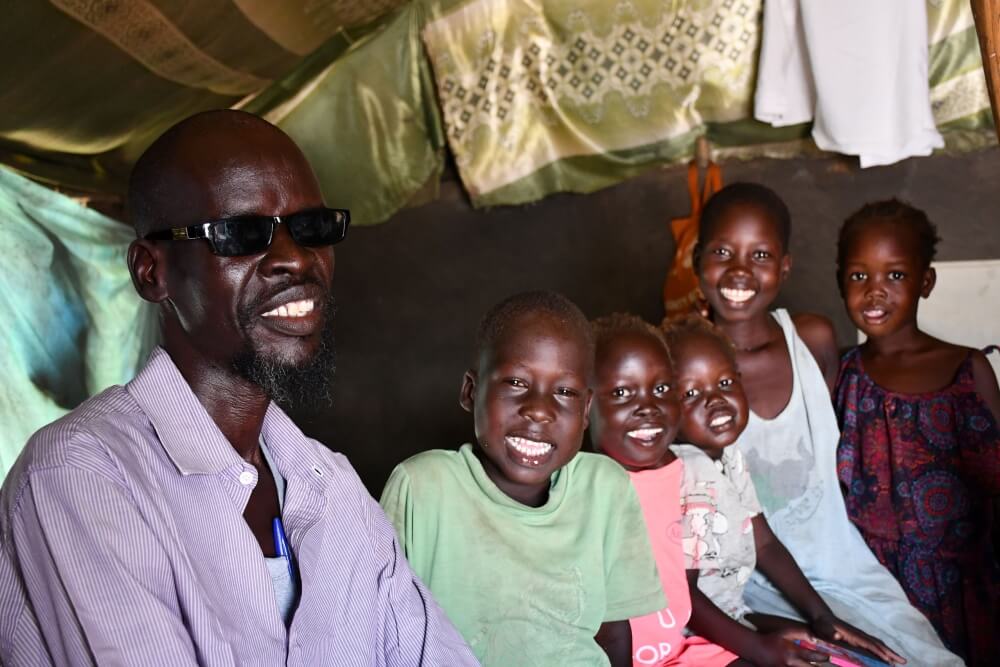
In South Sudan, Light for the World works with humanitarian partners to ensure camps are fully inclusive — from registration and information to accessing washrooms — for refugees and Internally Displaced People (IDPs) with disabilities.
Disability Inclusion Facilitators (DIFs) give on-the-job coaching to those managing refugee and IDP camps, including how to use disability inclusion scorecards, with individual medical referrals and rehabilitation plans also available.
David Liep, a South Sudanese refugee returnee, was referred to an eye clinic where he received surgery. His wife, Kinith Makuem, has received training to start a soap-making business and joined a local savings group.
“My wife carries the burden,” David says. “I hope that with the improvements in my eyesight, I will be able to support her.”
3. Collect inclusive data
Humanitarian organisations cannot address exclusion if they do not know who is being left behind. Yet disability is still widely undercounted in emergency assessments.
Disaggregated disability data helps organisations identify barriers, improve planning and design more effective responses.
How to do it:
- Use Light for the World’s SIRA tool to guide inclusive data collection
- Train staff and partners in inclusive data collection methods
- Share findings with OPDs and communities to drive advocacy and accountability
Data That Matters
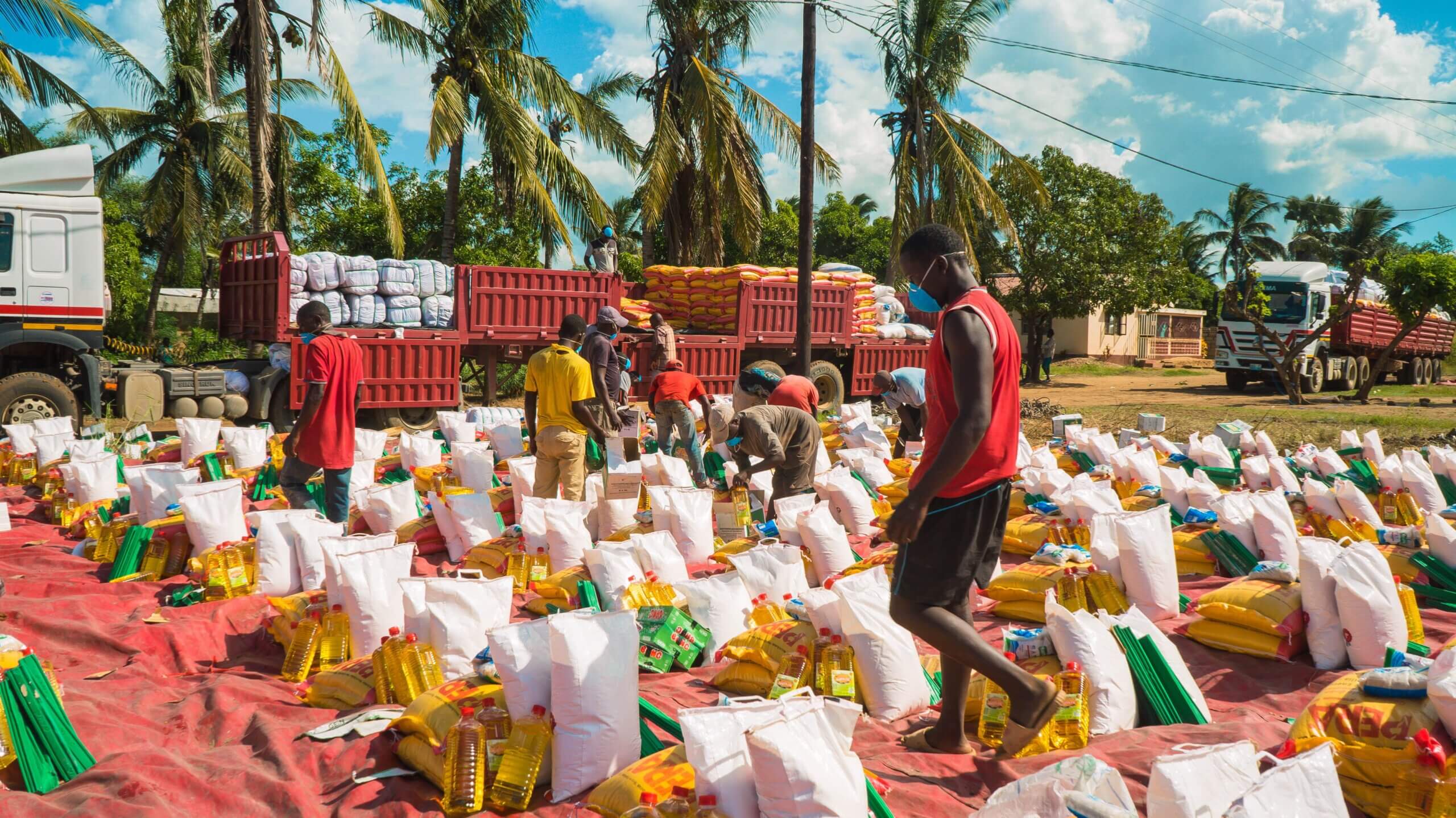
In Mozambique, Light for the World partnered with FAMOD (Forum of Associations of Persons with Disabilities) to co-create the first fully inclusive digital data collection tool for emergencies.
Survey for Inclusive Rapid Assessment (SIRA) is an open-source, screen-reader accessible tool that lets aid workers rapidly gather the right data, so emergency responses can reach people who would otherwise be missed.
“About one in six people globally has a disability,” says Jacqueline Bungart, Senior Expert, Humanitarian Action, at Light for the World.
“In humanitarian contexts, the number of people with disabilities is often much higher. For example, in Cabo Delgado, Mozambique, in 2024, people with disabilities made up over 30% of people affected when also considering psychosocial conditions.
“Comprehensive data on the actual prevalence of people with disabilities in emergencies is rare. Yet from our work we know they are among the most marginalised people during humanitarian crises.”
SIRA and a practical how-to guide for building inclusive data ecosystem were produced under the Data That Matters project, with funding by Elrha and UK Aid.
4. Prioritise meaningful participation
People with disabilities are experts in their own needs and should be involved in decisions that affect them. Actively and meaningfully include people with disabilities, especially women and OPDs, in disaster preparedness and emergency response planning.
Meaningful participation helps ensure responses reflect real needs and reduce exclusion during crises.
How to do it:
- Involve OPDs and people with disabilities in decision-making from the start
- Create accessible feedback mechanisms (e.g. focus groups, safe spaces or hotlines)
- Ensure representation in programme leadership and evaluations
Co-designing a protection plan
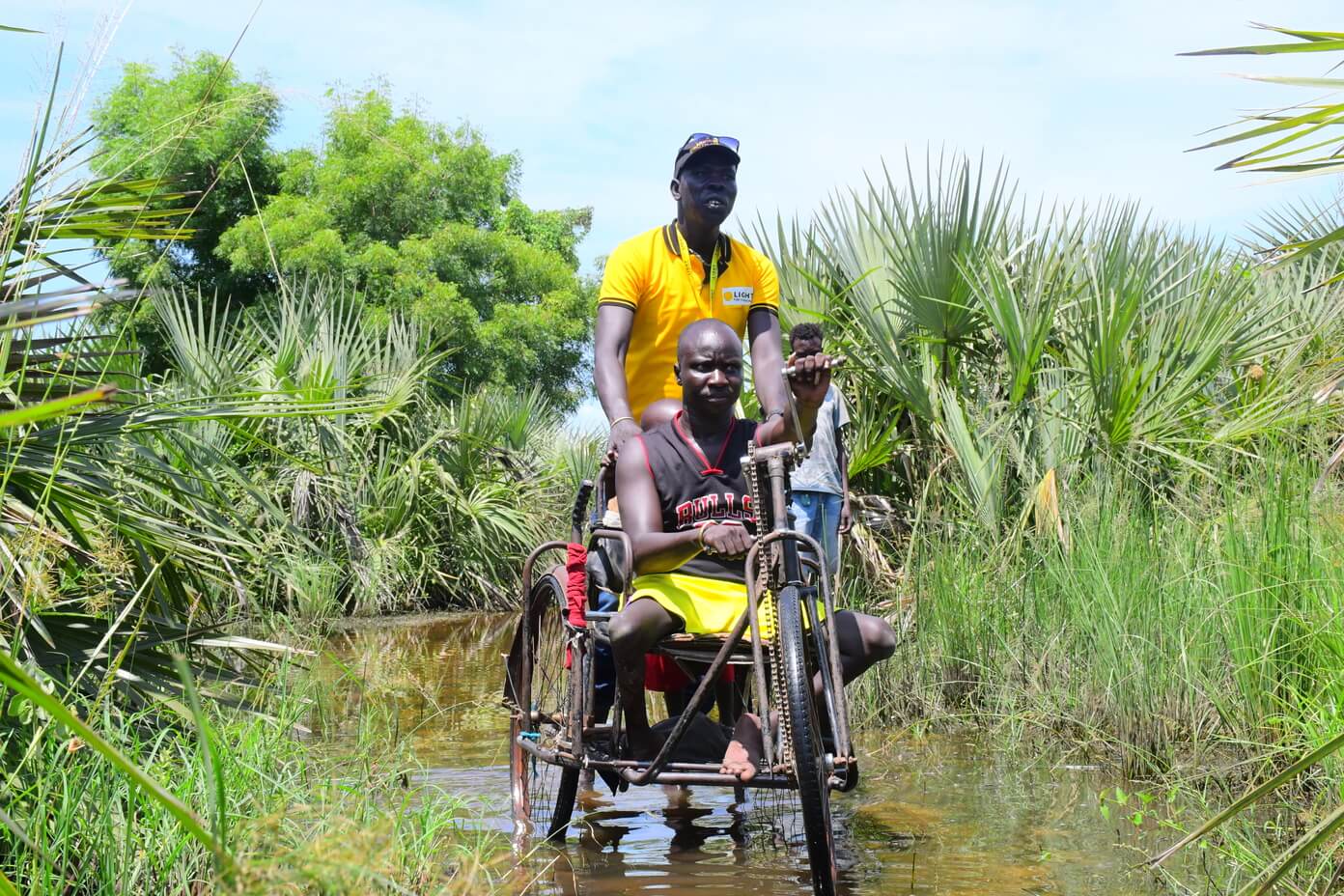
When devastating floods threatened Jonglei State in South Sudan, DIFs worked alongside people with disabilities to develop protection and evacuation plans.
They co-created evacuation plans alongside community leaders, including identifying what mobility devices and accessible shelters were required.
Training was delivered by DIFs, to ensure people with disabilities are involved in planning and better prepared to adapt and respond to future climate crisis-related disasters.
Athiei John, a DIF in Jonglei State, says: “We have been experiencing many challenges due to floods. But now, with the knowledge we’ve gained, we can plan with our stakeholders and raise awareness in the community about disaster risk management, especially for people with disabilities.”
5. Address intersectional discrimination
Disability does not exist in isolation. Gender, age, class, ethnicity, language, religion, sexual orientation and other factors can increase exclusion during emergencies.
How to do it:
- Analyse who is being excluded and why, including those being left out twice
- Tailor support to overlapping vulnerabilities (e.g. accessible mental health services)
- Advocate for intersectional inclusion in policy and funding decisions
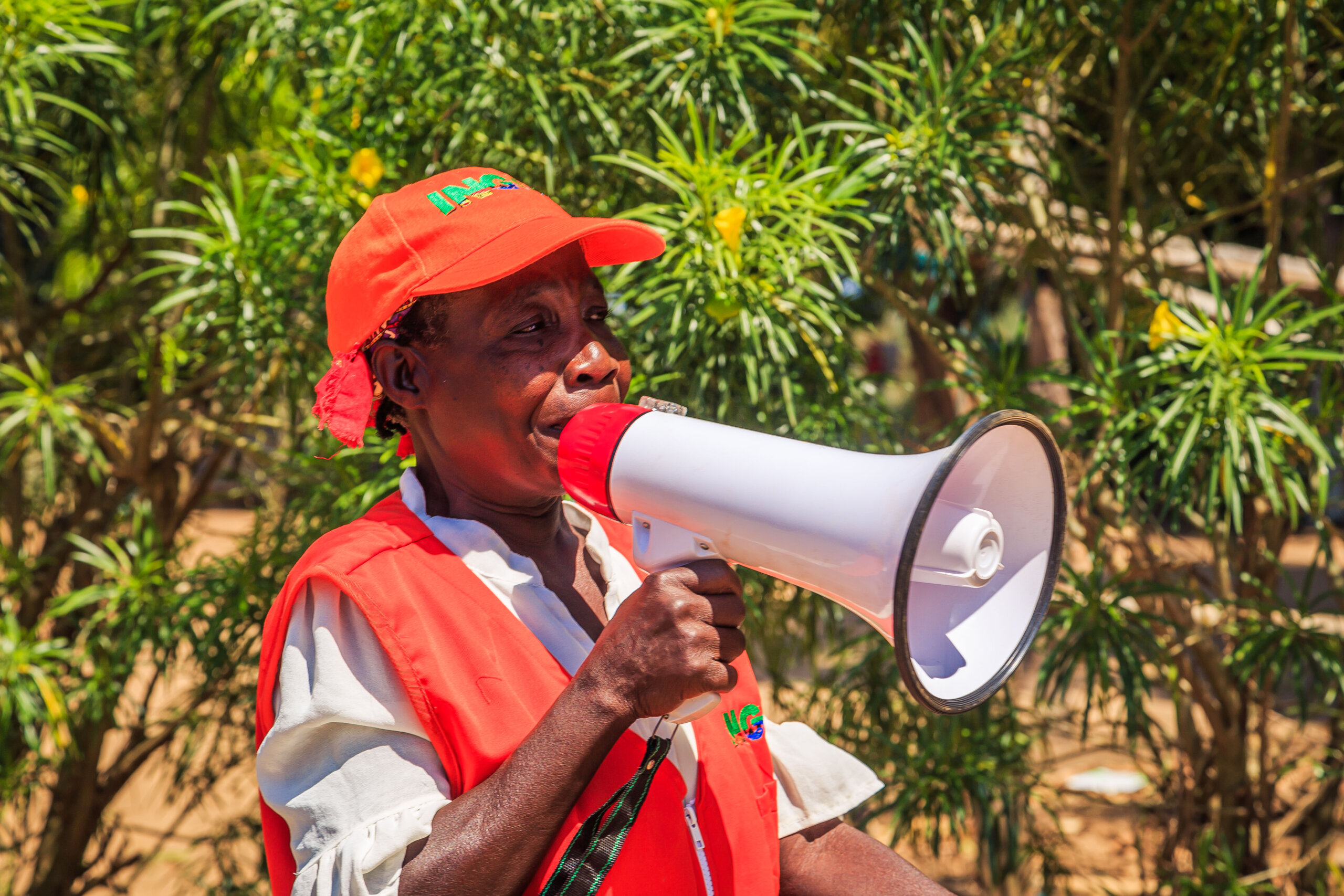
Including women and girls in disaster preparedness
Women are at high risk of experiencing violence, women and girls with disabilities are three times more likely to experience gender-based violence – including by family members, intimate partners, caregivers and institutional facilities. They are also frequently left out of emergency response planning.
In Mozambique, a cyclone simulation exercise helped people with disabilities prepare for disasters while ensuring women and girls are included in future planning of emergency response.
Gender was mainstreamed throughout the project, ensuring that women and girls with disabilities are included in creating emergency response plans to climate-related disasters.
The exercise, in Buzi, was part of the ICDP project, funded by the Austrian Development Agency.
Light for the World offers actionable advice for programmes on how to fight intersectional discrimination.
Common mistakes to avoid
Even well-intentioned programmes can exclude people with disabilities. Common mistakes include:
- Consulting OPDs too late
- Treating accessibility as only physical access
- Collecting disability data without adapting programming
- Assuming one solution works for everyone
- Excluding women and girls with disabilities from planning
Putting disability-inclusive humanitarian action into practice
Disability-inclusive humanitarian action is essential to effective emergency response.
Small changes can make a meaningful difference, from accessible communication to involving OPDs in programme design and decision-making.
Light for the World and our partners have developed practical tools and resources to help you embed inclusion in humanitarian work:
- Zero Project Crisis Report shares programme examples and practical guides, including: a guide on how to start for organisations (page 49) a checklist for including people with psychosocial disabilities (page 45) and a quiz to test if your organisation is inclusive (page 59).
- The Inter-Agency Standing Committee provides guidelines on inclusion of persons with disabilities in humanitarian action.
- Our Advocacy Issue Brief analyses the main barriers to inclusive humanitarian action and provides practical recommendations.
- Want to make your data more inclusive? Read this BOND article on how NGOs can close the disability data gap in crises.
- The European Disability Forum offers a comprehensive list of guidelines, tools and resources for disability-
- Light for the World has six tips for programmes on how to fight intersectional discrimination.
- And UNICEF shares a toolkit on including children with disabilities in humanitarian response.
Frequently asked questions
What is disability-inclusive humanitarian action?
Disability-inclusive humanitarian action is an approach to emergency response that makes sure people with disabilities are identified, consulted and supported at every stage — from preparedness and data collection through to evacuation, shelter and recovery. Under Article 11 of the UN Convention on the Rights of Persons with Disabilities, it is a legal obligation, not an optional extra.
Why are people with disabilities more at risk in emergencies?
People with disabilities are up to four times more likely to die in a disaster. Inaccessible information, shelters and evacuation procedures often leave them excluded from response efforts. According to the UN, 39 per cent of people with disabilities have a lot of difficulty or cannot evacuate during a sudden disaster.
How can NGOs make humanitarian programmes more inclusive?
There are five practical steps: partner with Organisations of Persons with Disabilities (OPDs) from the start, run an accessibility audit, collect disaggregated disability data, prioritise meaningful participation and address intersectional discrimination.
What are Organisations of Persons with Disabilities (OPDs)?
OPDs are organisations led by and made up of people with disabilities. They bring lived experience and local expertise about the barriers people face and how to remove them. Involving OPDs from the design stage — not just at evaluation — is one of the most effective ways to make a programme genuinely inclusive.
Why is disability data important in humanitarian response?
Organisations cannot address exclusion if they do not know who is being left behind, yet disability is still widely undercounted in emergency assessments. Disaggregated data helps identify barriers, improve planning and design responses that reach people who would otherwise be missed.
How does intersectionality affect disability inclusion in emergencies?
Disability does not exist in isolation. Gender, age, class, ethnicity, language, religion and other factors can deepen exclusion during a crisis. Women and girls with disabilities, for example, are three times more likely to experience gender-based violence and are often left out of emergency planning.